
Trauma Surgeon/Center

23
Jan
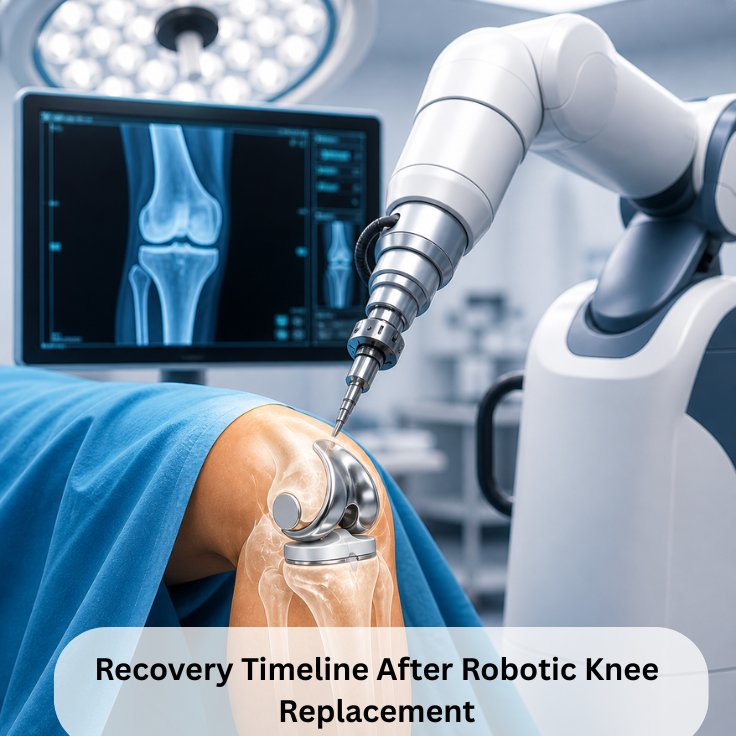
Recovery Timeline After Robotic Knee Replacement
What to Expect After Surgery
Recovery after robotic knee replacement is gradual. While robotic assistance may reduce tissue trauma and improve early mobility, complete recovery depends on physiotherapy, overall health, and patient discipline.
Robotic knee replacement has made knee surgery more precise and patient-friendly, but recovery still follows a structured healing process. Understanding the timeline helps patients set realistic expectations and stay consistent with rehabilitation. At Arihant Orthopedic Hospital, we guide every patient through each stage of recovery to ensure safe and effective healing.
Recovery Timeline Breakdown
Day 1 to Day 3: Immediate Post-Surgery Phase
- Patient is encouraged to stand and take a few steps with support
- Pain and swelling are managed with medication
- Basic leg movements and breathing exercises begin
- Hospital stay typically continues during this period
- Walking with walker or support improves gradually
- Knee bending exercises and physiotherapy begin intensively
- Swelling starts reducing slowly
- Patients are usually discharged and continue home care
Week 1 to Week 2: Early Mobility Phase
- Increased walking distance with or without support
- Improved knee flexibility and reduced stiffness
- Regular physiotherapy sessions are crucial
- Many patients resume light daily activities
Week 3 to Week 6: Strength Building Phase
- Most patients walk independently without support
- Strength and balance significantly improve
- Stair climbing becomes easier
- Return to routine household activities is common
Week 6 to Week 12: Functional Recovery Phase
- Full muscle strength gradually returns
- Pain is minimal or absent in most cases
- Patients can resume low-impact activities like cycling or swimming (as advised)
3 to 6 Months: Advanced Recovery Phase
- Knee function stabilizes fully
- Long-term mobility and comfort improve
- Implant integration and adaptation reach optimal level
6 to 12 Months: Complete Recovery
Factors That Affect Recovery Speed
Recovery can vary depending on:
- Age and overall health condition
- Weight and fitness level
- Severity of knee damage before surgery
- Consistency with physiotherapy
- Presence of other medical conditions
Role of Robotic Surgery in Recovery
Robotic knee replacement may support recovery by:
- Improving implant alignment
- Reducing soft tissue damage
- Minimizing early post-operative pain
- Allowing earlier mobility in many cases
However, recovery is still highly dependent on rehabilitation and patient effort.
Important Recovery Tips
- Follow physiotherapy instructions strictly
- Avoid overexertion in early weeks
- Maintain a healthy, balanced diet
- Keep surgical wound clean and monitored
- Attend regular follow-up visits
When to Contact Your Doctor
Seek medical attention if you notice:
- Persistent or increasing pain
- Excessive swelling or redness
- Difficulty in movement after initial improvement
- Fever or signs of infection
Expert Care at Arihant Orthopedic Hospital
At Arihant Orthopedic Hospital, under the guidance of Dr. Tejas Gandhi, we ensure complete post-operative support for every patient. Our recovery program includes:
- Personalized physiotherapy plans
- Regular progress monitoring
- Pain management strategies
- Long-term joint health guidance
Final Thoughts
- Recovery after robotic knee replacement is a step-by-step journey that typically spans a few months, with continuous improvement over time. While robotic technology can support a smoother early recovery, consistent rehabilitation remains the key to long-term success.
- If you are planning or recovering from knee replacement surgery, Arihant Orthopedic Hospital is here to guide you through every stage with expert care and support.


