
Trauma Surgeon/Center

19
Jan
Faster Recovery with Robotic Knee Replacement: Myth or Reality?
Understanding Robotic Knee Replacement
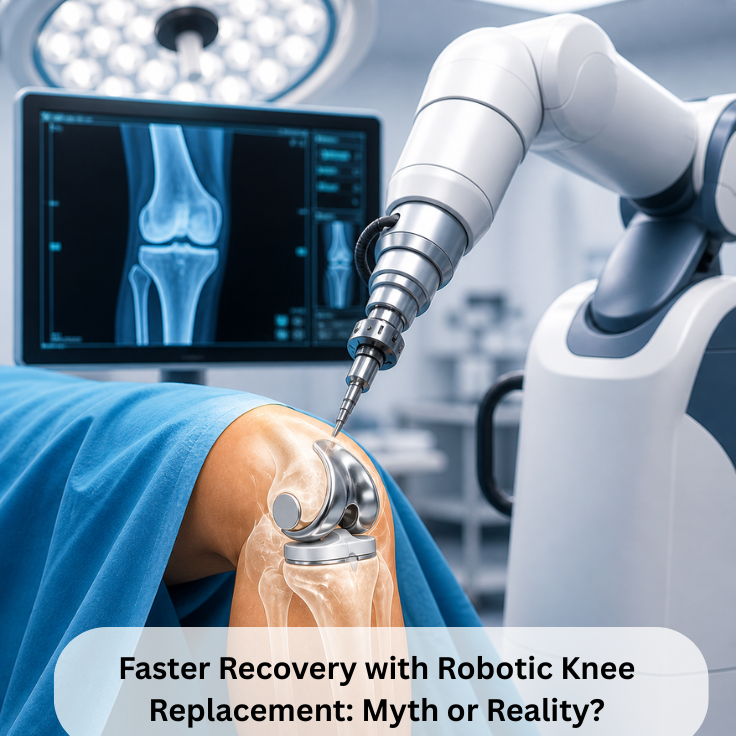
Robotic-assisted knee replacement is an advanced technique where a robotic system supports the surgeon in performing the procedure with high precision. It allows for detailed planning and accurate execution based on each patient’s unique anatomy.
Robotic knee replacement has gained significant attention in recent years, especially for claims of faster recovery and improved outcomes. But how much of this is true, and how much is simply hype? At Arihant Orthopedic Hospital, we believe in helping patients make informed decisions by understanding the facts behind advanced surgical options.
Does Robotic Surgery Really Offer Faster Recovery?
The idea of faster recovery is not a myth—but it is not guaranteed for every patient either. Recovery depends on multiple factors, including overall health, severity of joint damage, and commitment to rehabilitation.
However, robotic-assisted surgery can contribute to a smoother and potentially quicker recovery in several ways.
What Still Matters Most?
Even with advanced technology, recovery is not solely dependent on the type of surgery. Key factors include:
- Following a structured physiotherapy program
- Maintaining a healthy lifestyle
- Adhering to medical advice
- Staying consistent with rehabilitation exercises
Without proper post-surgery care, recovery may still be delayed regardless of the surgical method used.
When Should You Consider Robotic Knee Replacement?
You may explore this option if:
- You are advised knee replacement surgery
- You are looking for advanced, precision-based treatment
- You want to potentially improve recovery experience
- You prefer a more personalized surgical approach
A consultation with a specialist will help determine the best treatment plan for your specific condition.
Expert Care at Arihant Orthopedic Hospital
At Arihant Orthopedic Hospital, Dr. Tejas Gandhi combines expertise with advanced technology to deliver optimal outcomes for patients. Our approach focuses on:
- Accurate diagnosis and patient evaluation
- Use of advanced surgical techniques, including robotic assistance
- Personalized rehabilitation programs
- Continuous patient support throughout recovery
We strive to ensure not just successful surgery, but a smooth and confident recovery journey.
Factors That May Support Faster Recovery
-
Greater Surgical Precision
Robotic technology helps in precise implant placement and alignment, which can improve joint function and reduce post-operative discomfort.
-
Minimal Damage to Surrounding Tissues
With better planning and accuracy, there is often less disruption to healthy tissues. This can result in reduced pain and quicker healing.
-
Improved Joint Stability
Accurate positioning of the implant can enhance balance and stability, making it easier for patients to regain mobility sooner.
-
Reduced Post-Operative Pain
Many patients report lower pain levels after robotic-assisted procedures, which can help them participate more actively in physiotherapy.
-
Early Mobilization
Patients are often able to stand and walk with support within a shorter period, which is crucial for faster recovery.
Final Thoughts
- Faster recovery with robotic knee replacement is not a myth—but it is not automatic either. While the technology offers several advantages that can support quicker healing, the overall outcome depends on a combination of surgical precision and patient commitment.
- If you are considering knee replacement and want to explore the benefits of robotic surgery, Arihant Orthopedic Hospital is here to guide you every step of the way.
- For consultation or more information, connect with Arihant Orthopedic Hospital and move closer to a pain-free, active life.


