
Trauma Surgeon/Center

20
Jan
When Do You Need Knee Replacement? Signs You Shouldn’t Ignore
Understanding Knee Replacement
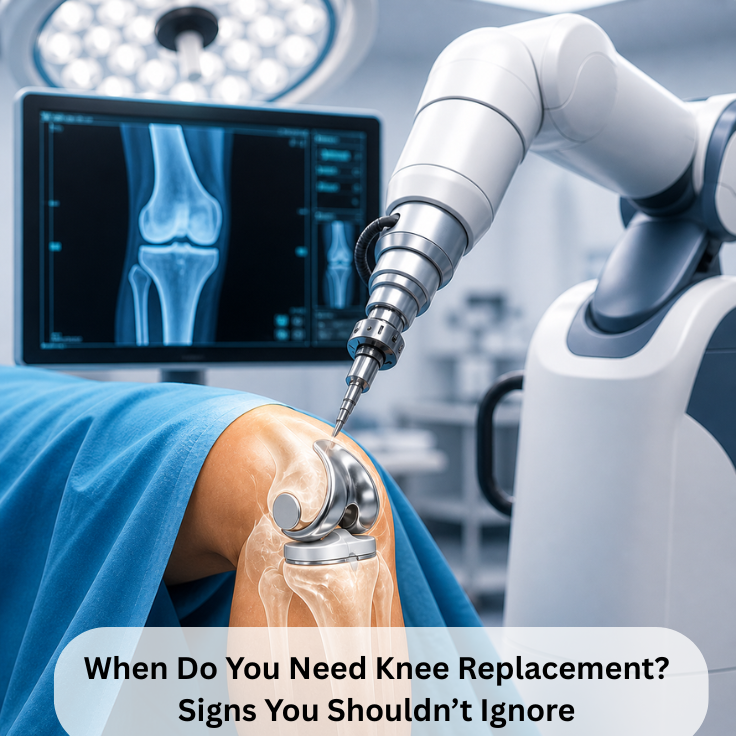
Knee replacement surgery (knee arthroplasty) is a procedure in which damaged parts of the knee joint are replaced with artificial implants. It is commonly recommended for patients suffering from advanced arthritis or severe joint damage that no longer responds to conservative treatments.
Knee pain is often dismissed as a natural part of aging or a temporary issue caused by overuse. However, persistent or worsening discomfort may indicate a serious underlying condition that requires medical attention. At Arihant Orthopedic Hospital, we frequently see patients who delay treatment—only to find their condition has significantly progressed. Recognizing the early warning signs can help you seek timely care and avoid unnecessary suffering.
When Should You Consult a Specialist?
You should seek expert advice if:
- Knee pain persists for several weeks
- Swelling is recurring or worsening
- Movement becomes restricted
- Pain interferes with sleep or daily life
Early consultation can help in diagnosing the condition accurately and planning the most effective treatment.
Expert Care at Arihant Orthopedic Hospital
Under the guidance of Dr. Tejas Gandhi, Arihant Orthopedic Hospital is committed to providing advanced and patient-centered orthopedic care. From accurate diagnosis to state-of-the-art knee replacement procedures, our goal is to restore mobility, reduce pain, and improve your overall quality of life.
- Personalized treatment plans
- Minimally invasive surgical techniques
- Faster recovery and rehabilitation
- Comprehensive post-surgery care
Signs You Shouldn’t Ignore
-
Persistent or Severe Knee Pain
If you experience continuous knee pain that does not improve with rest, medications, or physiotherapy, it may be a sign of advanced joint deterioration. Pain that disrupts your sleep or occurs even while resting is particularly concerning
-
Difficulty Performing Daily Activities
Simple movements like walking, climbing stairs, or getting up from a chair becoming painful or difficult is a clear indication that your knee function is compromised.
-
Swelling and Stiffness
Chronic inflammation or stiffness that limits your ability to bend or straighten your knee can point to cartilage damage or joint degeneration.
-
Knee Deformity
A visible change in the alignment of your knee—such as bowing inward or outward—suggests significant wear and tear in the joint.
-
Lack of Relief from Non-Surgical Treatments
When medications, injections, physiotherapy, and lifestyle modifications no longer provide relief, it may be time to consider surgical options.
-
Reduced Mobility and Independence
If knee pain is affecting your ability to move freely or forcing you to depend on others, it is important to explore long-term solutions.
-
Grinding or “Bone-on-Bone” Sensation
A grinding feeling or clicking sounds during movement may indicate that the protective cartilage in your knee has worn away.
Final Thoughts
- Knee replacement is not just about relieving pain—it’s about regaining your freedom to move and live comfortably. Ignoring the signs can lead to further complications and reduced quality of life.
- If you or your loved ones are experiencing persistent knee problems, don’t delay seeking professional help. Early intervention can make all the difference.
- For consultation or more information, connect with Arihant Orthopedic Hospital today and take the first step towards pain-free living.


